What Is Infrastructure as Code and Why Does It Matter?
Learn the concept of Infrastructure as Code (IaC), how it works, its business benefits, and adoption trends in Indonesia toward 2027-2028 in this complete guide.
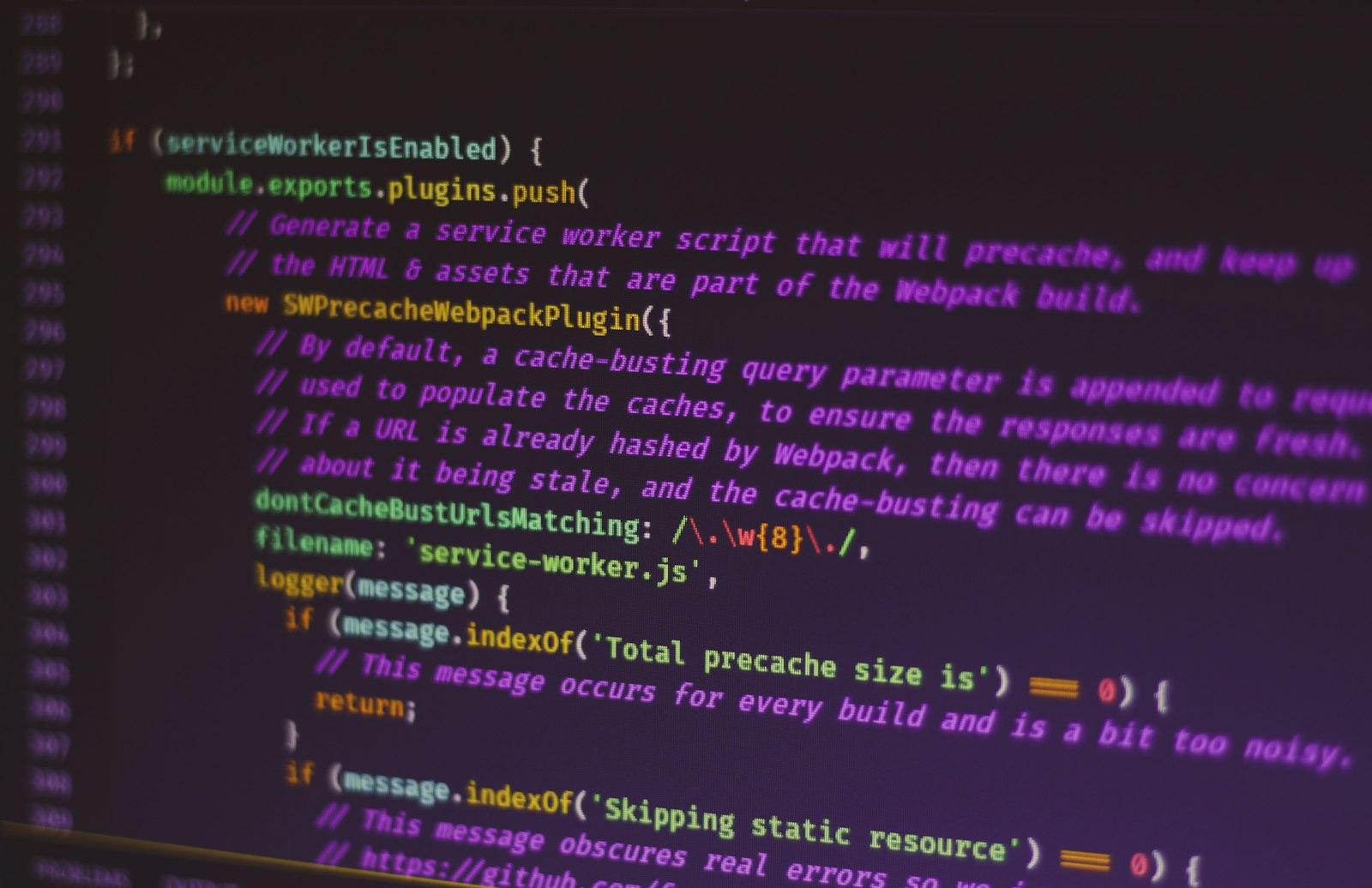
Based on projections from various global technology research institutions, the Infrastructure as Code (IaC) market is expected to surpass a valuation of more than 2.3 billion US dollars by 2026, with a compound annual growth rate (CAGR) of around 24% through 2028. This figure is not merely an industry statistic — it reflects a fundamental shift in how modern companies build, manage, and scale their digital infrastructure. Amid increasingly massive digital transformation acceleration, reliance on manual processes to manage servers, networks, and cloud services has become the biggest barrier to innovation speed. Operational teams that must manually configure hundreds of servers are not only slow but also vulnerable to human errors that can be fatal. Infrastructure as Code is an infrastructure management paradigm that treats all system configurations — servers, networks, databases, and security policies — as software code that can be written, tested, revised, and re-executed automatically.
What Is Infrastructure as Code? Turning Infrastructure into Software
Imagine you are a chef in a large restaurant. Without IaC, every time you want to make a dish, you have to prepare the spices manually from scratch: measuring salt pinch by pinch, chopping onions one by one, and adjusting the stove flame by estimation. The result can differ each time, and if there are a hundred portions to prepare, the process is very slow and error-prone. With IaC, you write the entire recipe in a standard book — complete with measurements, step order, temperature, and cooking time. Every time you want to make the dish, you simply follow that recipe, and the result will always be identical, fast, and repeatable by anyone.
That is the essence of Infrastructure as Code: a digital recipe for your infrastructure. Instead of clicking through a cloud provider's interface, typing commands one by one in the terminal, or asking the IT team to prepare servers for days, you write infrastructure definitions in text files — usually using formats like YAML, JSON, or declarative languages like HCL (HashiCorp Configuration Language). The file is then executed by automation tools to create, modify, or delete infrastructure resources consistently.
In practice, IaC is divided into two main approaches that you need to understand:
Declarative Approach: You only define the desired end state, for example, "I want 5 virtual servers with specific specifications, a load balancer, and an encrypted database." The IaC tool will analyze the current condition and automatically make any necessary changes so that the actual state matches that definition. Terraform and AWS CloudFormation are popular examples of this approach in 2026.
Imperative Approach: You write a sequence of specific commands that must be executed to achieve a certain configuration, similar to writing a shell script. Ansible and Chef are examples of tools that heavily use this approach. The imperative approach provides more detailed control but requires a deep understanding of execution order.
Hybrid Approach: Many modern organizations in 2026 combine both: using declarative tools for large-scale infrastructure provisioning and imperative tools for application configuration or highly specific settings.
The core of all these approaches is the same: infrastructure is no longer treated as a physical object that must be touched one by one, but as a software artifact subject to modern development principles such as versioning, testing, and continuous integration.
Why Infrastructure as Code Matters: Competitive Advantage in the Multi-Cloud Era
1. Radical Provisioning Speed
In the 2026 digital business landscape, speed is the primary currency. Companies that can launch new features, open testing environments, or expand capacity within minutes will always outperform competitors that still rely on manual processes. With IaC, what used to take weeks — from submitting tickets to the infrastructure team, budget approval, to manual server configuration — can now be completed in minutes or even seconds. A complete production environment consisting of dozens of servers, load balancers, databases, and network configurations can be deployed automatically simply by running one command or merging code changes into the repository.
Case Study – Digital Retail Company: A mid-sized e-commerce platform in Southeast Asia reported that after adopting Terraform and an integrated CI/CD pipeline, their environment provisioning time dropped from an average of 14 business days to less than 2 hours. This allowed the development team to run three times more feature experiments per quarter, which directly impacted increased sales conversion.
2. Consistency and Elimination of Configuration Drift
A classic problem in traditional infrastructure management is what is called configuration drift — a condition where servers that should be identical gradually become different due to manual patches, emergency changes, or undocumented human intervention. This kind of drift is a source of nightmares for operational teams: problems that appear in production are difficult to replicate in staging, deployments fail due to environment differences, and security audits find unexpected gaps. IaC eliminates this problem by making the code definition the single source of truth. Every time the IaC tool runs, it will compare the actual state with the code definition and automatically correct any differences.
3. Fast and Reliable Disaster Recovery
The risk of disaster — from data center failure and ransomware attacks to configuration errors that cripple systems — can never be completely eliminated. However, with IaC, disaster recovery changes from a long, uncertain process into a measurable and fast operation. Because all infrastructure is defined in code stored in a Git repository, you can rebuild the entire environment from scratch in a different cloud region simply by running the same pipeline. Since 2026, many companies have also combined IaC with chaos engineering practices to proactively test system resilience. The average recovery time (MTTR) of companies mature in IaC generally drops to under 30 minutes for total failure scenarios, compared to days with the traditional approach.
4. More Effective DevOps Collaboration
IaC is a natural bridge between development teams (Dev) and operations teams (Ops). Because infrastructure is now written as code, developers can create pull requests for infrastructure changes, undergo code review, and follow the same CI/CD process they use for application code. Operations teams, on the other hand, can implement security and compliance policies as reusable code modules, instead of manually applying rules that are often inconsistent. The result is a collaborative culture where infrastructure changes can be tracked, audited, and rolled back in the same way as application changes.
Infrastructure as Code Adoption in Indonesia
Indonesia entered a significant acceleration phase of IaC adoption in 2026, driven by continuous growth of the digital economy and the need for scalable cloud infrastructure. Digital banks, fintech companies, e-commerce, and even the government sector are beginning to realize that manual infrastructure management is no longer sufficient to face traffic surges and increasingly stringent cybersecurity demands.
Key Players: In the Indonesian market, IaC adoption is dominated by global tools that have become industry standards: Terraform from HashiCorp for multi-cloud provisioning, AWS CloudFormation for Amazon Web Services users, Ansible for configuration automation, and Pulumi, which is increasingly popular because it allows writing infrastructure using general-purpose programming languages like Python and TypeScript. On the service provider side, the three major hyperscalers — AWS, Google Cloud Platform, and Microsoft Azure — are competing to strengthen their service integration with IaC tools. Meanwhile, several local technology companies have begun developing IaC modules specifically for the Indonesian market needs, such as compliance with personal data regulations and integration with local payment services.
Local Success Stories:
A leading fintech lending company in Jakarta managed to cut testing environment provisioning time from 3 days to 45 minutes after adopting Terraform with internal modules. Their team now runs an average of 40 deployments per day with a failure rate below 0.5%.
A digital bank based in Indonesia uses IaC to manage more than 500 compute instances across three cloud regions simultaneously. With security policies codified, they successfully passed compliance audits with zero critical findings for two consecutive years.
A local e-commerce platform with peak traffic of millions of users per day relies on IaC pipelines to automatically scale infrastructure during major shopping campaigns. Compute capacity can be increased by up to 300% in less than 10 minutes, then scaled back down after traffic normalizes.
A logistics startup in Surabaya uses Ansible to standardize the configuration of thousands of edge devices in their warehouses. The time saved from manual configuration is estimated to be equivalent to two full-time technicians.
Challenges & How to Overcome Them
1. Steep Learning Curve for Traditional Teams
The biggest challenge in adopting IaC is not the technology, but the mindset change of the team. System administrators accustomed to graphical interfaces or shell commands often struggle to understand declarative concepts, state management, and Git workflows. The way to overcome this is with a gradual approach: start with small, non-critical projects, provide formal training, and encourage a learning culture through pair programming between team members who are already proficient and those who are just learning. Internal learning platforms and safe sandbox environments for experimentation have also proven effective in accelerating adoption in many organizations.
2. Complex State Management at Large Scale
When your infrastructure grows to thousands of resources across many environments, managing state files — which track the actual condition of each resource — becomes a challenge in itself. Corrupted or out-of-sync state files can cause serious provisioning errors. The solution is to use a managed remote state backend (such as Terraform Cloud or an object storage backend with versioning), implement state locking to prevent concurrent access, and divide configuration into small, independent modules. Best practice in 2026 is to treat the state backend as a critical component that is regularly audited and backed up.
3. Security Risks from Infrastructure Code
Because IaC turns security configurations into code, errors in that code can open security gaps en masse. For example, a module that misconfigures a security group can expose hundreds of servers to the public internet in a single execution. The way to overcome this is to integrate dedicated security scanning tools for IaC — such as Checkov, tfsec, or built-in cloud provider scanners — into your CI/CD pipeline. Security policies must also be defined as code (policy as code) and required to pass checks before any changes are applied.
4. Vendor or Tool Lock-in
Locking yourself into a single IaC tool or a single cloud provider can limit long-term flexibility. Overcoming this requires an architecture that separates business logic from vendor implementation — for example, by using internal abstraction modules that can target various providers. Periodic portability evaluation and considering tools that natively support multi-cloud will help organizations remain flexible in facing future business needs.
The Future of Infrastructure as Code
Integration with AI and Machine Learning: By 2027-2028, IaC tools are expected to become increasingly intelligent with predictive capabilities to detect potential misconfiguration before execution, as well as machine learning-based cost and performance optimization recommendations.
Environment as Code: This concept began to mature in 2026 — not just infrastructure, but the entire development environment complete with dependencies, service configurations, and access policies will be defined as code that can be deployed to local workstations or the cloud identically.
More Integrated Policy as Code: Compliance with regulations such as the Personal Data Protection Law in Indonesia and global security standards will be increasingly enforced through code that automatically validates every infrastructure change before it is applied to production.
GitOps as an Operational Standard: GitOps practices — making the Git repository the control center of all infrastructure — are projected to become the de facto standard in many organizations by 2027, replacing the manual pipeline workflows that are still widely used today.
Conclusion: An Unavoidable Foundation for Digital Organizations
Infrastructure as Code is no longer just a helper tool for skilled DevOps teams — it has become an unavoidable foundation for digital organizations that want to survive and excel in 2026 and beyond. With the ability to accelerate provisioning, guarantee consistency, recover from disasters quickly, and build a collaborative culture, IaC transforms infrastructure from an operational burden into a strategic asset. For Indonesian companies competing in the digital economy, investment in IaC skills and tools is not an option but a prerequisite for scalability, security, and innovation speed. The future of infrastructure will be entirely determined by code, and that future has already begun today.