CI/CD Pipeline Tutorial for Web Applications in 2026
Learn step by step how to build a CI/CD pipeline for web applications in 2026, from architecture and current tools to security practices and automation.
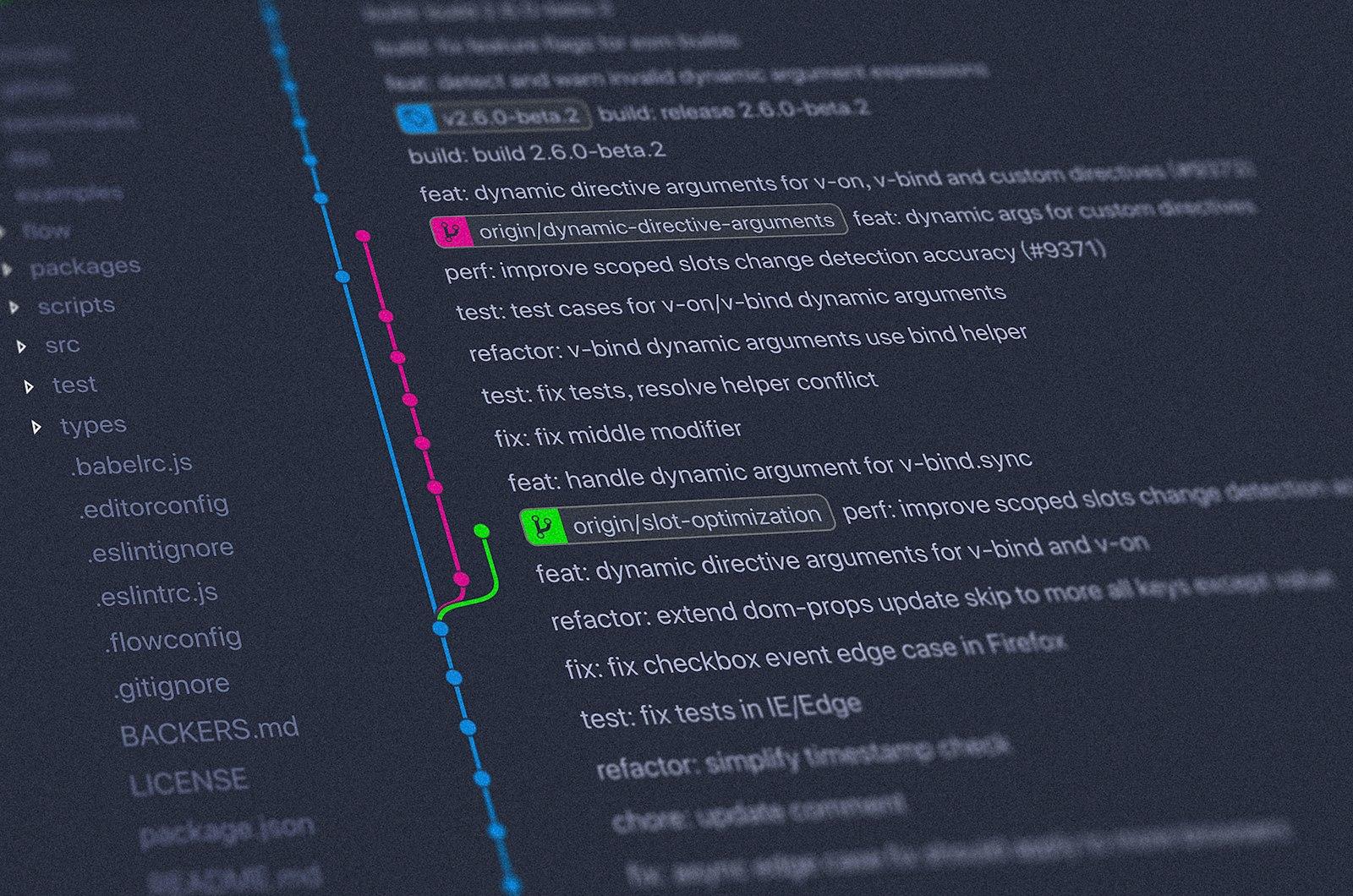
By 2026, more than 80% of medium to large software development organizations are reported to have adopted continuous integration and continuous delivery (CI/CD) practices as the primary foundation of their web application release cycles. This figure has risen significantly compared to a few years ago, driven by the need for faster feature releases, user expectations of zero-downtime updates, and competitive pressure in the digital realm. At the same time, the complexity of modern web applications—from microservices architecture to edge rendering—makes manual pipelines no longer adequate. This article will guide you in building a CI/CD pipeline that is reliable, secure, and ready to meet the demands of 2026 through 2028. A CI/CD pipeline is the backbone of modern software delivery automation that turns every code commit into a tested and measurable production release.
What Is a CI/CD Pipeline? The Foundation of Modern Release Automation
Imagine a fast-food restaurant serving hundreds of orders per hour. In the kitchen, every order passes through a fixed line: ingredients are checked for freshness, cooked according to standard recipes, quality-checked by a supervisor, then packaged and handed to the customer. If one step fails—for example, wilted vegetables—the order will never reach the customer's table without correction. A CI/CD pipeline works on a similar principle for your web application code: every code change (commit) is automatically checked, tested, built, and—if it passes all checks—delivered to the production environment without error-prone manual intervention.
Technically, a CI/CD pipeline is divided into two main interconnected phases. Continuous Integration (CI) focuses on merging code changes from multiple developers into a shared repository on a regular basis, followed by automated build and testing processes to detect conflicts or bugs as early as possible. Continuous Delivery (CD) continues the CI results to the stage of automated deployment to staging or production environments, often with manual approval for production. Meanwhile, Continuous Deployment—a more aggressive variant—pushes every change that passes testing directly to production without human approval.
In practice, a CI/CD pipeline for web applications in 2026 generally consists of the following stages that you can use as a basic framework:
Source Stage: Pipeline trigger from a push to a specific branch or pull request in a Git repository (GitHub, GitLab, Bitbucket).
Build Stage: Code compilation, dependency installation, and artifact creation (JavaScript bundles, container images, static assets).
Test Stage: Running unit tests, integration tests, end-to-end tests, and automated security scans.
Release Stage: Tagging artifact versions, storing them in a registry (Docker Hub, GHCR, AWS ECR), and preparing deployment manifests.
Deploy Stage: Applying artifacts to target environments—staging, production, or infrastructure-as-code-based environments such as Kubernetes.
Monitor Stage: Collecting metrics, logs, and traces from the newly deployed application to provide feedback to the team.
Why CI/CD Pipelines Matter: Concrete Benefits for Web Teams in 2026
1. Release Speed as a Competitive Advantage
In the 2026 digital market, time from idea to production often distinguishes market leaders from followers. Companies that can release small features daily—even several times a day—can respond to user feedback in near real-time. CI/CD removes manual barriers such as local machine builds, one-by-one test execution, and deployment dependent on a single "server expert." Automated pipelines can process dozens of commits per day, build artifacts in minutes, and run thousands of tests in parallel. As a result, your web team can ship critical bug fixes in hours, not weeks.
Case Study – Regional e-commerce company: A medium-sized online shopping platform with about 200 developers reported an increase in deployment frequency from twice a month to more than 15 times per day after adopting a standardized CI/CD pipeline in early 2026. The direct impact was a reduction in critical bug fix time from an average of 2 days to 45 minutes, as well as a 6% increase in checkout conversion because experimental features could be tested and launched faster.
2. Code Quality and Much Earlier Bug Detection
The longer a bug persists in code, the more expensive it is to fix. CI/CD forces every code change through a series of automated tests before it can be merged into the main branch. This practice prevents the accumulation of "technical debt" that often arises when testing is only done right before a major release. Moreover, modern pipelines in 2026 have integrated AI-based static analysis tools that can detect common bug patterns, security vulnerabilities, and even code smells before humans review them. In other words, a CI/CD pipeline acts as a tireless automated quality gate.
3. Healthier and More Productive Team Collaboration
Without CI/CD, integrating code from many developers often becomes a tense moment—"integration hell"—where merge conflicts pile up and consume hours. CI/CD pipelines encourage developers to integrate small, frequent changes, so conflicts can be resolved early and on a small scale. On the other hand, QA teams no longer become a bottleneck because automated regression tests run on every commit. This frees QA to focus on exploratory testing and complex scenarios that require human creativity. The end result is a more collaborative, transparent, and low-friction engineering culture.
4. Security Built In from the Start (Shift-Left Security)
2026 marks an era where web application security is no longer a separate stage at the end of the development cycle, but is directly integrated into the pipeline. This practice is known as DevSecOps. Tools like Snyk, Trivy, and GitHub Advanced Security have now become standard components in CI/CD pipelines, scanning third-party dependencies, container images, and source code for known vulnerabilities. If a library you use has a new CVE (Common Vulnerabilities and Exposures), the pipeline can automatically fail the build and notify the team. This approach drastically narrows the window of exposure to supply chain attacks that are increasingly prevalent in 2026.
CI/CD Pipeline Adoption in Indonesia: Key Players and Success Stories
CI/CD adoption in Indonesia in 2026 has accelerated rapidly, no longer limited to large tech startups or unicorns. Mid-sized companies, digital banks, fintech services, and even government agencies building public service applications now consider automated pipelines a mandatory standard. Driving factors include the increasing availability of local DevOps talent, support for local cloud regions (such as AWS Jakarta, Google Cloud Jakarta, and Azure Indonesia), and the awareness that manual deployment is not scalable.
Key Players: At the global level, GitHub Actions and GitLab CI/CD dominate the repository-based pipeline market in 2026, with Bitbucket Pipelines still strong among enterprises already tied to the Atlassian ecosystem. Meanwhile, Jenkins—though considered legacy by some—persists in many large companies thanks to its plugin flexibility, now often combined with Kubernetes-native architecture. On the cloud provider side, AWS CodePipeline, Google Cloud Build, and Azure DevOps offer deep integration with their respective cloud services. In Indonesia, local players have also emerged, such as DOKU and several system integrators that provide ready-to-use pipelines for the digital MSME segment.
Local Success Stories:
Tokopedia: This e-commerce giant has long been a reference for DevOps practices in Indonesia. By 2026, they are known to be capable of performing hundreds of deployments per day to production environments with the help of an internal pipeline built on Kubernetes and custom tooling.
Gojek (GoTo Financial): GoTo's financial services unit relies on CI/CD pipelines to ensure security compliance and high reliability for their payment applications, with automated audit trails on every release.
Bank Jago: This digital bank leverages CI/CD to accelerate the launch of new banking features while maintaining the strict security standards required by regulators, proving that even the traditional financial sector can move quickly.
Halodoc: This healthtech platform uses automated pipelines to handle frequent application updates, including integration with telemedicine and pharmacy services, without disrupting patient services.
Challenges & How to Overcome Them in Building CI/CD Pipelines
1. Slow Pipelines That Hinder Developers
Nothing frustrates developers more than waiting 30 minutes for a pipeline to run for every small commit. Slow pipelines encourage bad practices such as skipping tests or piling up many changes into one large commit. Common causes include uncached builds, tests running serially, and CI infrastructure lacking resources.
How to overcome it: Apply aggressive dependency caching (for example, cache the node_modules folder or Docker layers), run tests in parallel by splitting the suite into multiple jobs, and use CI runners with adequate specifications. Also consider a DAG (Directed Acyclic Graph)-based pipeline architecture that allows independent stages to run concurrently. Aim for a pipeline duration of under 10 minutes for healthy feedback.
2. Insecure Secrets and Credential Management
CI/CD pipelines require access to various secrets—database credentials, API tokens, SSH keys, cloud credentials—and this is where many teams slip up. Storing secrets in configuration files committed to the repository, or writing them directly in pipeline scripts, is a security disaster waiting to happen. By 2026, attacks on CI/CD pipelines (such as credential harvesting from public logs) have become increasingly sophisticated.
How to overcome it: Use the built-in secrets management features of your CI platform (GitHub Secrets, GitLab CI Variables, AWS Secrets Manager) and never write secrets in code. Apply the principle of least privilege—give tokens only the permissions they truly need. Rotate secrets regularly and use OIDC (OpenID Connect) for cloud authentication without storing long-term credentials.
3. Deployment to Inconsistent Environments
Web applications that run smoothly on a developer's laptop or staging often fail in production due to environmental differences: different runtime versions, missing system libraries, or inconsistent network configurations. This problem is exacerbated when teams use manually provisioned servers without version control.
How to overcome it: Adopt containerization with Docker to ensure the application and its dependencies are wrapped in an identical unit across all environments. Use Infrastructure as Code (Terraform, Pulumi, or CloudFormation) to provision and manage infrastructure declaratively and reproducibly. In other words, staging and production environments should be "cattle, not pets"—recreatable at any time from code, not manually maintained.
4. Lack of Visibility and Post-Deployment Feedback
A pipeline that stops at the deploy stage without monitoring application health in production is only half the journey. Many teams experience incidents that could actually be prevented if they had visibility into performance metrics, error rates, and application logs immediately after release.
How to overcome it: Integrate a monitoring stage into the pipeline or connect it with existing observability systems (for example, Datadog, New Relic, Grafana, or Prometheus). Apply canary deployment or blue-green deployment practices so you can shift traffic gradually and automatically roll back if health metrics deteriorate. Mature pipelines in 2026 can even trigger automatic rollbacks without human intervention when error thresholds are exceeded.
The Future of CI/CD Pipelines
Policy-as-Code Pipelines: By 2027, more organizations will define pipeline rules—such as "all container images must pass critical vulnerability scans"—as auditable code, rather than just manual configuration in the UI. This enables automated compliance with internal standards and external regulations.
Deeper AI Integration: AI not only helps write code but also optimizes the pipeline itself—predicting which stages are at risk of failure, recommending the fastest test order, and automatically fixing inefficient infrastructure configurations.
Continuous Verification and Chaos Engineering: Future pipelines will test not only functionality but also resilience. Chaos experiments (randomly shutting down servers, simulating traffic spikes) will become a standard part of the pipeline to ensure web applications remain reliable under pressure.
Serverless CI/CD: Cloud providers are increasingly pushing a model where CI/CD pipelines run without user-managed servers, eliminating runner operational overhead, enabling unlimited auto-scaling, and paying only for actual usage. This will lower the barrier to entry for small startups that want modern release practices without large infrastructure investment.
Conclusion: A Mandatory Foundation for Modern Web Teams
A CI/CD pipeline is no longer just a nice-to-have technical practice, but an operational foundation that determines how fast and how safely your team can move in the 2026 digital landscape. By starting with a simple pipeline—even just automating build and unit tests—you have already laid the first stone toward a healthier engineering culture. Over time, expand the scope of your pipeline: add security scanning, integrate with infrastructure as code, and weave feedback from production back to the development team. In an increasingly competitive landscape, teams that can release without fear are the teams that will lead the market. Start building your CI/CD pipeline today, step by step, and make automation a habit, not a side project.